Your Guest Experience Is a System (Whether You Designed It or Not)

Walk into almost any tasting room and you’ll hear the same thing:

“We just want it to feel warm and welcoming.”

And it usually does, at least when the right staff member is working, the room isn’t slammed, and nothing unexpected happens.

But here’s the uncomfortable truth:

Guest experience is not a vibe. It’s a system.
And whether you’ve designed that system or not, your winery already has one.

The question is simple: Is it working for you or against you?

The Hidden Cost of “Winging It” in the Tasting Room

Many wineries still treat hospitality as something that happens organically. They hire friendly people, give them product knowledge, and trust that great experiences will naturally follow.

Sometimes they do.

But when guest experience depends on personality instead of process, it becomes unpredictable and unpredictability is expensive.

You may recognize these symptoms:

  • Some staff convert guests to club consistently, others rarely do
  • Follow-up emails happen… sometimes
  • Guest notes live in notebooks, inboxes, or memories
  • Return visits feel random instead of intentional
  • Your team feels busy, but not always effective

From the outside, the tasting room looks busy and successful.
Behind the scenes, opportunities quietly slip away every day.

The cost of “winging it” isn’t obvious in a single weekend.
It shows up slowly in lower club conversion, fewer return visits, and guests who loved their visit but never deepen the relationship.

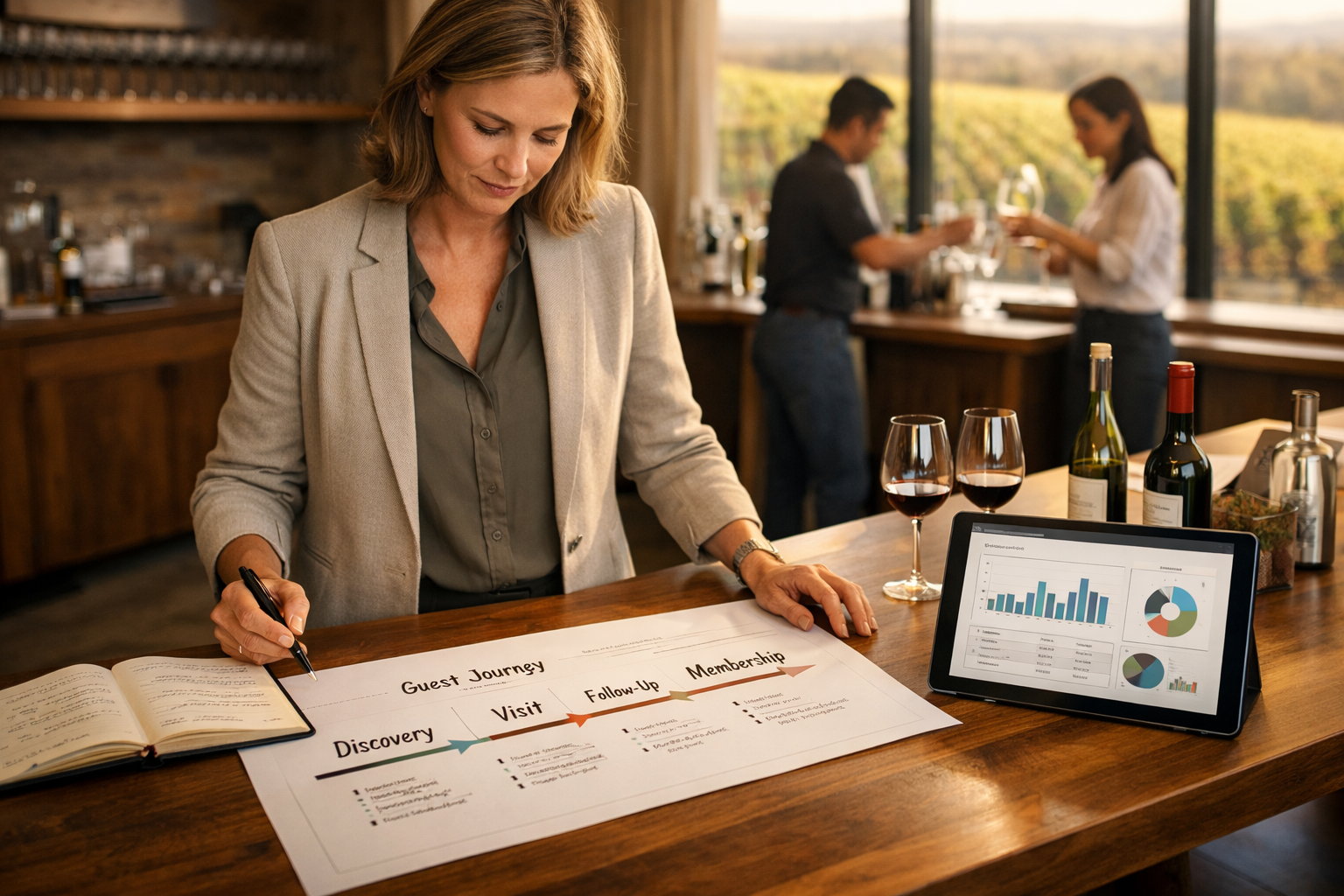
The 4 Stages of the Modern Guest Journey

Today’s winery guest experience doesn’t start at the tasting bar and it doesn’t end at checkout.

It’s a connected journey made up of four stages:

1. Discovery

How guests find you and decide you’re worth visiting.

This includes:

  • Website experience
  • Social media storytelling
  • Google search and reviews
  • Email and SMS engagement
  • Event and referral traffic

By the time a guest arrives, they already have expectations. Your digital presence has set the tone before a single glass is poured.

2. The Visit

This is the moment wineries focus on most and rightfully so, but the visit isn’t just about wine. It’s about:

  • Personalization
  • Storytelling
  • Ease of purchase
  • Staff confidence
  • Feeling seen and remembered

The visit is where emotion is created.

3. Follow-Up

This is where most wineries unintentionally drop the ball.

After the visit, guests are still deciding:

  • Should we come back?
  • Should we buy again?
  • Should we join the club?

Without structured follow-up, the emotional momentum fades quickly.

4. Membership

The final stage isn’t a transaction, it’s a relationship.

Wine clubs and loyalty programs are not checkout add-ons.
They are the natural continuation of a well-designed guest journey.

When these four stages work together, guest experience becomes consistent, scalable, and measurable.

Where Most Wineries Lose Guests (The Data Gap)

The biggest breakdown in the guest journey usually isn’t the tasting itself.

It’s the handoff between stages.

Most wineries have:

  • Marketing data
  • Sales data
  • Club data

But what’s often missing is guest experience data.

Key questions often go unanswered:

  • Was this their first visit?
  • Who did they visit with?
  • What wines did they love?
  • Were they interested in joining the club?
  • What brought them in?
  • What experience did they have?

When this information isn’t captured, every visit becomes a fresh start.
Your team loses the ability to build continuity.

Guests don’t expect you to remember everything, but they love when you remember something.

And remembering requires a system.

Why CRM Adoption = Service Consistency

CRM tools are often misunderstood as “sales software.”

In reality, they are hospitality infrastructure.

A well-used CRM allows your team to:

  • Recognize returning guests
  • Personalize follow-up communication
  • Track guest preferences
  • Understand visit history
  • Create intentional outreach
  • Deliver consistent experiences across staff and locations

Without CRM adoption, hospitality becomes dependent on memory.
With CRM adoption, hospitality becomes repeatable and scalable.

Consistency is what turns good visits into lasting relationships.

Staff Confidence Is the Hidden Driver of Guest Satisfaction

There is another benefit wineries often overlook:

Systems reduce staff anxiety.

When expectations are unclear, staff members rely on instinct.
Some thrive in that environment. Many feel uncertain.

Clear systems provide:

  • Confidence in what to say
  • Confidence in what to capture
  • Confidence in how to follow up
  • Confidence in how success is measured

Confident staff create relaxed guests.
Relaxed guests stay longer, spend more, and return more often.

Great hospitality isn’t just guest-facing, it’s team-empowering.

Guest Experience Is Built, Not Left to Chance

The most successful wineries aren’t warmer, friendlier, or more charming than everyone else.

They’re more intentional.

They design the guest journey.
They capture meaningful data.
They train their teams using real insights.
They connect every visit to long-term relationships.

They treat guest experience as a system.

And the results compound over time.

Want to Start Building Your Guest Experience System?

In our upcoming Vantage Growth Session, From Harvest to Hospitality, we’ll show wineries how to:

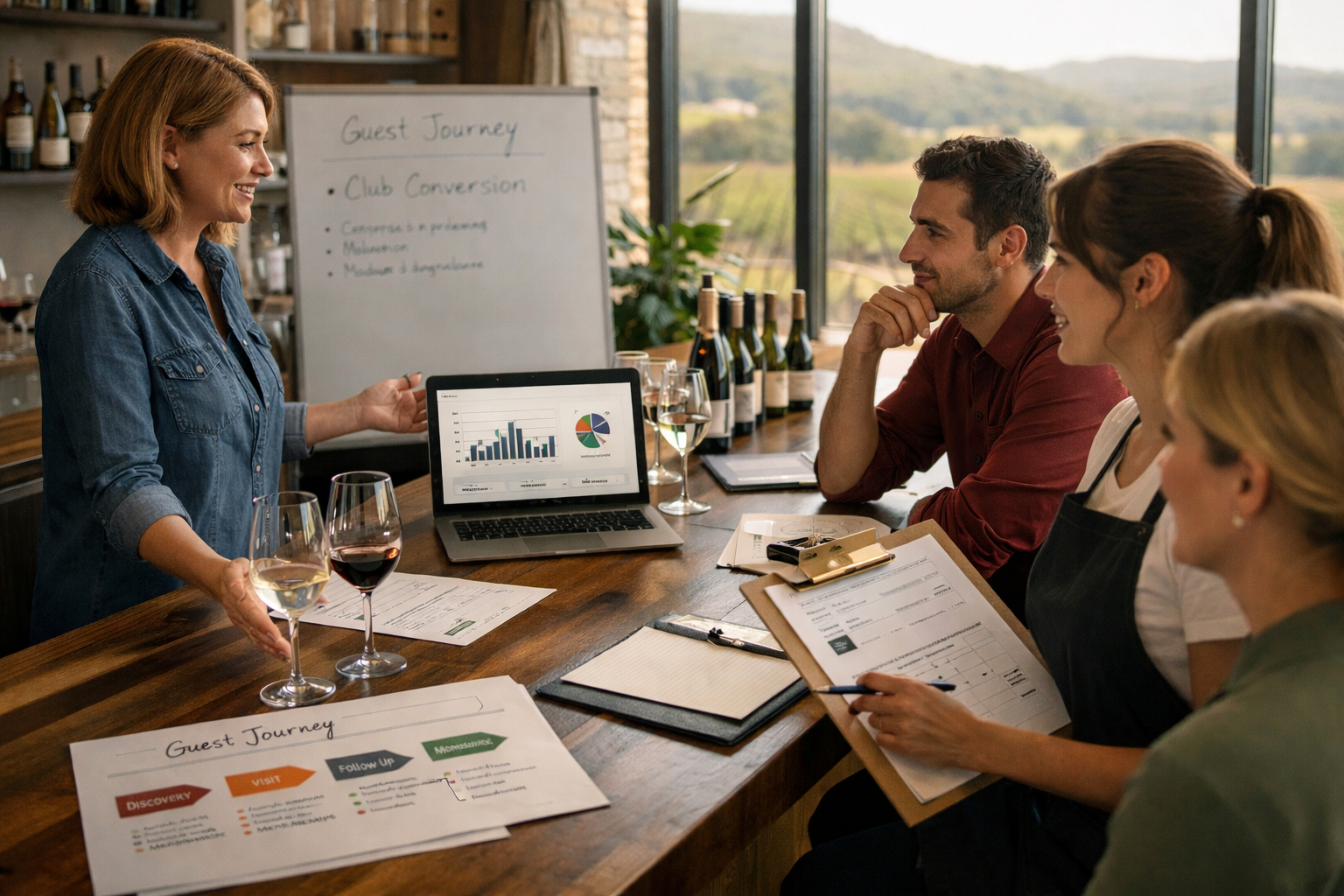
  • Map the full guest journey
  • Identify data gaps
  • Train teams using real customer insights
  • Build simple workflows that turn visits into lifelong customers

We’ve also created a practical companion resource:
The Modern Winery Guest Experience Toolkit, a workbook filled with templates, checklists, and worksheets to help you start implementing these ideas immediately.

Join the session and download the toolkit to begin building a more intentional, data-driven guest experience.

Because great hospitality should never rely on luck.