From Taster to Member: Mapping the Customer Journey
4 min read
Marketing : Feb 20, 2026 10:04:07 AM
If you have spent any time managing a tasting room, you already know this truth. Hospitality is everything.
But here is the part we do not talk about enough. Hospitality without structure burns people out, creates inconsistency, and leaves revenue on the table.
Most wineries train their tasting room teams with product knowledge, brand story, and a few service standards. That is a great starting point. Your team absolutely needs to know the wines, the vineyard story, and how to read a room.
But the wineries that consistently convert guests to club members, grow repeat visits, and build confident teams are doing something different.
They are training from their own data.
The best hospitality training is not generic. It is built from what is actually happening inside your four walls.
Traditional tasting room training usually looks something like this: Shadow a senior associate. Learn the tasting script. Memorize the wine notes. Practice the club pitch. Smile.
And then hope it all works out.
The problem is that generic training does not reflect your actual guests. It reflects an idea of what guests should be doing.
If your training says every table should hear the same club pitch at the same time in the tasting, but your data shows most of your conversions happen after checkout, then your training is disconnected from reality.
If your team is coached to push the reserve tier aggressively, but your CRM shows your entry tier has the highest lifetime value and lowest churn, then you are accidentally steering them in the wrong direction.
When training is not grounded in your own numbers, it becomes theoretical. And theoretical training does not build confident teams.
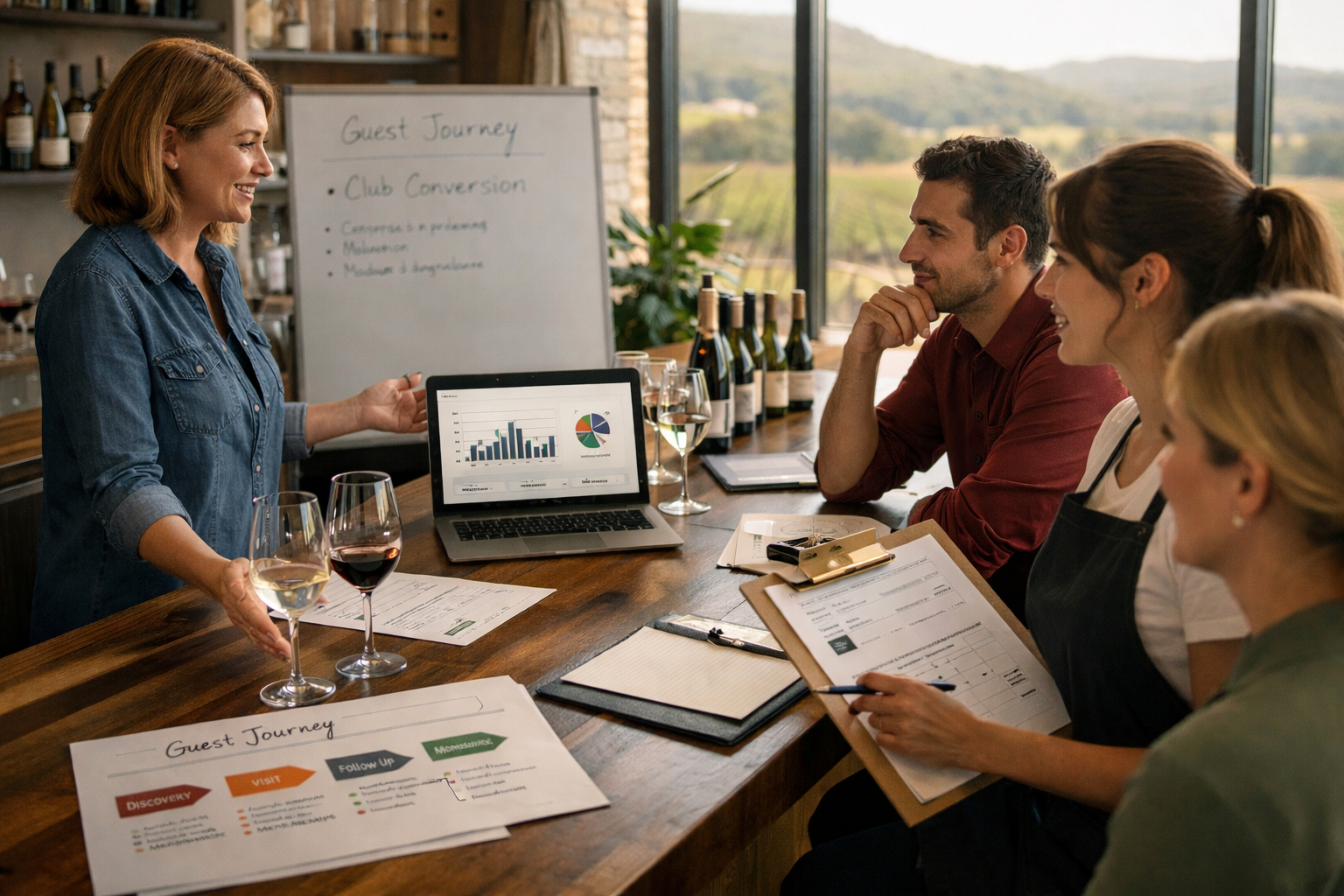
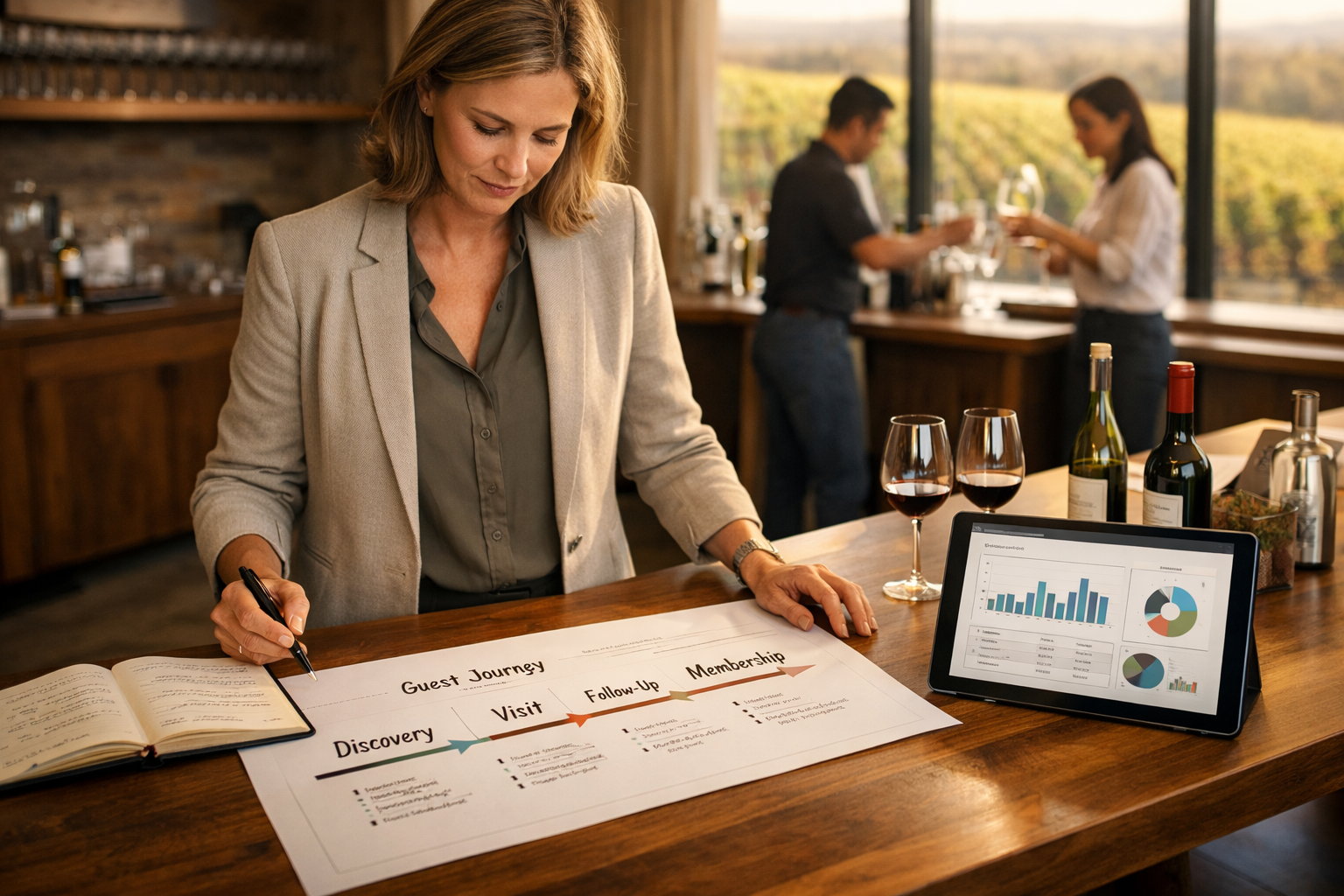
Your CRM is not just a marketing tool. It is a coaching tool.
When used correctly, it tells you what is actually working in your tasting room.
Start simple.
What is your visit to purchase rate?
What is your purchase to club conversion rate?
What is the average order value per guest?
Now take it one layer deeper.
Which associates consistently convert above average?
What time of day sees higher club sign ups?
Are conversions higher for seated tastings versus bar service?
Instead of saying, we need to sell more club, you can say, here is where we are, here is what is possible, and here is what success looks like.
Benchmarks give your team clarity. Clarity reduces stress.
And when staff understand the goalposts, they stop guessing and start improving.
Your data will also show you where guests hesitate.
Maybe guests are purchasing but not joining the club.
Maybe first time visitors rarely return within six months.
Maybe event attendees convert at a much higher rate than walk ins.
Those are not problems. Those are coaching opportunities.
If guests are not joining the club, listen to how the team is framing it. Are they presenting it as a discount program or as a membership experience.
If return visits are low, are you capturing enough preference data during the tasting to make follow up personal.
When you look at your CRM reports as feedback instead of judgment, your team starts seeing numbers as helpful rather than threatening.
Every tasting room hears the same phrases.
We drink a lot of different wines.
We travel too much.
We need to think about it.
We do not have room for more wine.
Your CRM can actually show you how often those guests come back anyway, or how often they purchase again without joining.
Instead of training your team to overcome objections with pressure, train them to respond with understanding backed by data.
If your data shows that flexible clubs with skip options reduce churn, your team can confidently explain that membership does not mean being locked in.
If your numbers show that most members stay for more than two years, your staff can speak from evidence, not hope.
That shift changes the energy in the room.
The key is how you present the numbers.
No one wants to be called out in a staff meeting because their conversion rate is lower than someone else’s.
But everyone appreciates clear, supportive coaching.
Instead of saying, your club numbers are low, try saying, here is what we are seeing across the team, and here are two small adjustments we can test this month.
Use real examples from successful shifts.
Role play actual guest scenarios pulled from your own tasting notes.
Highlight small wins and improvements over time.
Data becomes a mirror, not a weapon.
And when coaching is framed as learning instead of criticism, your team leans in instead of pulling back.
Here is something many owners overlook.
Confident staff create better guest experiences.
When associates understand what works, when they see their progress, and when they feel supported by clear systems, they stop feeling like every shift is a performance review.
They feel capable.
That confidence shows up in their tone, their storytelling, and their ability to naturally introduce membership without awkwardness.
It also reduces burnout.
High turnover in tasting rooms is often tied to unclear expectations and inconsistent feedback. When success feels random, it is exhausting.
When success is measurable and achievable, it becomes motivating.
Data driven coaching builds a culture where improvement is normal, conversations are constructive, and hospitality feels intentional rather than chaotic.
When you connect your CRM insights to your training, something powerful happens.
Your team understands why they are capturing data.
Your managers understand how to coach.
Your marketing team understands how to follow up.
Your guests feel seen and remembered.
And revenue grows as a byproduct of better experiences.
The wineries that thrive in the coming years will not be the ones with the flashiest tasting rooms. They will be the ones that align their systems with their service culture.
In our upcoming Vantage Master Class, we are diving into exactly how to turn CRM data into actionable tasting room training, complete with real examples, coaching frameworks, and a step by step workshop guide your managers can use immediately.
We are also releasing a practical training companion workbook designed to help you audit your current approach and build a more confident, data informed hospitality team.
If you are ready to move from guessing to guiding, join us for the session and grab the workshop guide.
Because great hospitality is not luck. It is learned, measured, and intentionally built.
From Taster to Member: Mapping the Customer Journey
Measuring Digital Engagement in DTC Wine Sales The wineries thriving in 2026 share one common trait. They measure what matters and act on what they...