Beyond the Website: Building a Digital Guest Experience That Feels Like Hospitality
What Today’s Winery Guests Expect Online The expectations guests bring to your winery’s digital presence have fundamentally changed. What worked...
8 min read
Marketing : Feb 3, 2026 10:46:01 AM
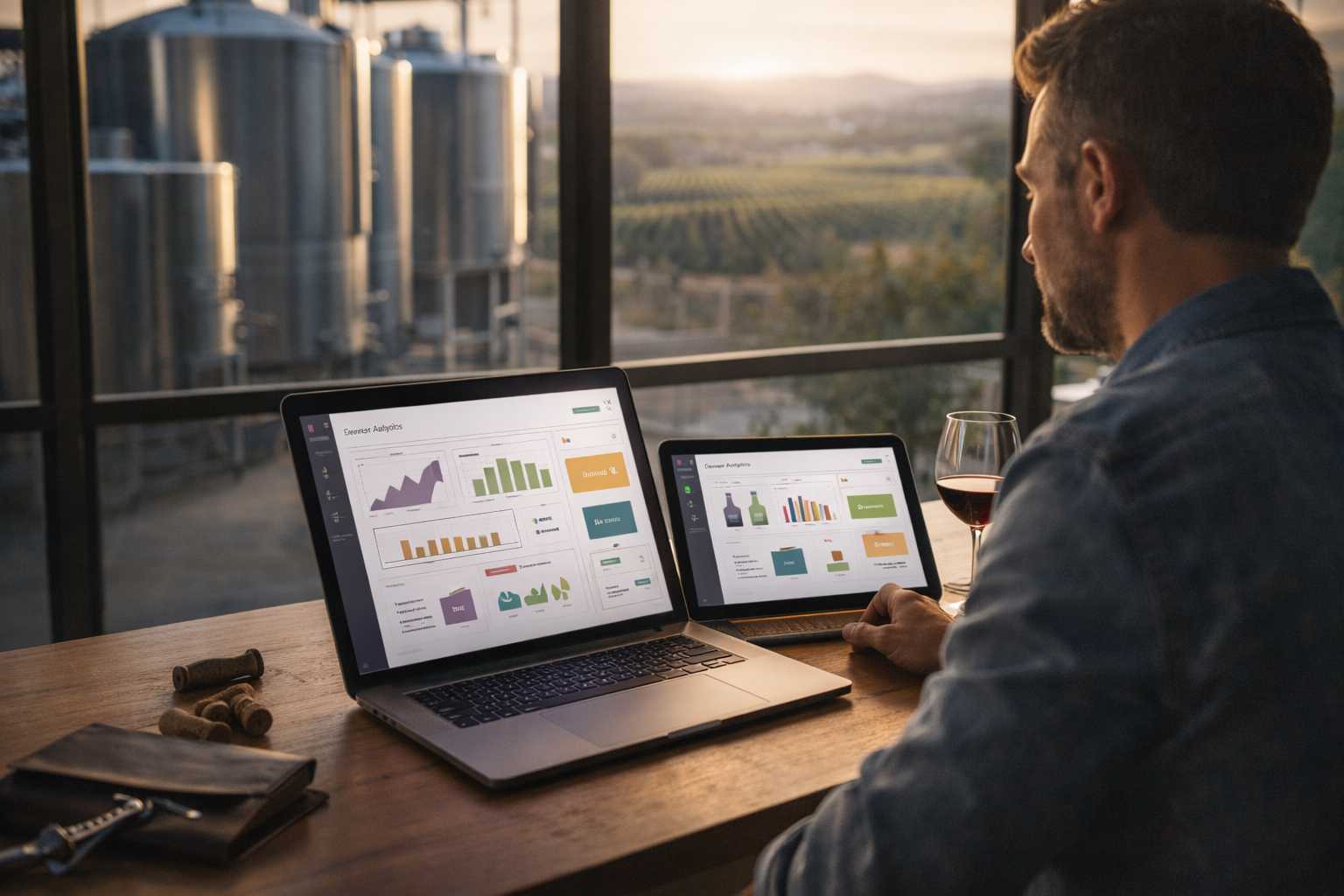
The wineries thriving in 2026 share one common trait. They measure what matters and act on what they learn. While many operations still focus on basic sales reports, the wineries pulling ahead understand that strong analytics reveal not only what happened, but why it happened and what to do next.
The challenge today is not access to data. Modern systems produce more numbers than most teams can realistically review. The real challenge is deciding which metrics actually guide decisions and drive sustainable growth. As many industry leaders point out, you cannot manage what you do not measure, but measuring everything often leads to confusion instead of clarity.
This becomes especially important in direct to consumer operations, where the tasting room, ecommerce, wine clubs, and events must work together as one system. When metrics live in separate places, the picture is incomplete. The right DTC metrics show how digital engagement turns into long term customer value and healthier operations.
This article breaks down the winery analytics that matter most, how to track them, and how to turn numbers into actions that improve both guest experience and business performance.
The operating environment for DTC wineries has changed. What once relied on intuition and experience now requires clear data and regular review. As mobile shopping, online reservations, and digital marketing became core parts of winery operations in 2025, the wineries that measured and adjusted outperformed those that relied on instinct alone.
Several forces are driving this shift. Competition is tighter, which makes efficiency more important. Guest expectations now include personalized communication at scale. Multiple sales channels make it harder to rely on memory or gut feeling. Margins are under pressure, which means every investment needs to show a return. Technology now makes it possible to measure behavior that was once invisible.
Strong analytics are not about building reports for last quarter’s meeting. They are about creating systems that surface insight when decisions need to be made. Real time visibility matters more than perfect historical data when you are managing a busy tasting room weekend or planning a club shipment.
Measurement also creates alignment across teams. When everyone shares the same goals and the same numbers, it becomes easier to see how each role contributes to the success of the winery. Without clear metrics, priorities become subjective and effort becomes scattered.
Not every metric deserves equal attention. The most valuable KPIs connect directly to financial health and customer lifetime value. These are the numbers that help owners and managers decide where to invest time, money, and people.
For most DTC wineries, the core metrics include:
Benchmarking data shows that strong DTC operations often achieve gross margins above 70 percent, while solid performers stay above 60 percent. These benchmarks help you understand whether your operation is competitive or leaving money on the table.
The most important test for any metric is simple. If it changes, do you know what action to take? If a number never leads to a decision, it may not be worth tracking on a regular basis.
Wine clubs remain the most valuable customer group for many wineries, accounting for a large share of total DTC revenue. Yet many teams focus heavily on signups and overlook the retention metrics that determine long term profitability.
Key wine club metrics include:
Industry data from 2025 showed that discount focused clubs often experienced higher churn than experience driven programs. This highlights why retention quality matters just as much as retention rate. Members who stay for access, connection, and experiences tend to build deeper loyalty than those who stay only for price.
These metrics help surface problems early. If members leave after the first shipment, your onboarding process likely needs work. If long term members start canceling, something has changed in perceived value or communication. Data makes these trends visible before revenue suffers.
Your website and online store generate data at every click. The challenge is focusing on the numbers that point directly to guest experience and conversion.
The most useful digital metrics include:
Some of the most valuable insights come from comparisons. Look at how mobile conversion compares to desktop. Compare new visitors to returning customers. Compare social traffic to search traffic. These differences show where small improvements can lead to meaningful gains.
When cart abandonment rises, something in the checkout flow is creating friction. When mobile traffic is high but mobile sales lag, your site likely needs better mobile design. Regular weekly reviews keep optimization proactive rather than reactive.
The tasting room remains one of the strongest drivers of wine club growth. But in today’s environment, in person and digital engagement are closely linked and should be measured together.
Key tasting room metrics include:
The last two metrics are especially important. If you do not capture contact information, the relationship often ends when the guest leaves. If you capture it but never follow up, the opportunity is wasted.
Industry data shows that wineries following up within 48 hours of a tasting visit convert significantly more guests into members and repeat buyers. Measuring both the visit and the digital follow up creates a full picture of the guest journey.
Understanding the difference between leading and lagging indicators changes how you use data. Lagging indicators tell you what already happened. Leading indicators help you shape what happens next.
Common lagging indicators include total revenue, gross margin, inventory levels, club membership counts, and cases sold. These matter for reporting, but they often arrive too late to influence day to day decisions.
Leading indicators include website traffic trends, email engagement, reservation booking pace, club renewal rates, and guest satisfaction scores. These numbers give early warning signs that allow you to adjust before performance declines.
For example, a drop in email engagement often shows up weeks before a drop in sales. A rise in reservation cancellations can signal an experience problem before it affects club growth. Leading indicators give you time to respond.
Collecting data only matters if it leads to decisions. The most effective wineries use simple, repeatable frameworks that connect metrics to action.
A practical approach includes:
The platform you use plays a major role here. Disconnected systems make unified measurement difficult and time consuming. Unified platforms allow teams to see tasting room, ecommerce, and club performance in one place, which makes regular review realistic rather than overwhelming.
Even data driven wineries fall into predictable traps.
Common mistakes include tracking too many metrics, focusing on outputs instead of outcomes, failing to set baselines, reviewing numbers without acting on them, comparing against irrelevant benchmarks, and making changes without measuring impact.
The most damaging mistake is tracking numbers that do not connect to any real decision. If no one knows what to do when a metric changes, that metric is not helping the business.
Start with clear goals, then choose metrics that show progress toward those goals. Let strategy guide measurement, not the other way around.
The ultimate purpose of analytics is improving customer lifetime value. Every meaningful metric should connect to acquiring better customers, increasing what they spend over time, or keeping them longer.
Useful approaches include:
These methods work best when customer data is unified across tasting room, online store, and wine club. When data is fragmented, this level of insight becomes difficult for most teams to maintain.
Analytics will continue to become more powerful and easier to use. Predictive tools will forecast guest behavior. Real time dashboards will make performance visible at a glance. Artificial intelligence will surface patterns that once required hours of manual review.
What will not change is the need for clear thinking. Metrics must connect to decisions. Data must connect to action. The wineries that succeed will be the ones that use better tools to make better choices, not simply collect more numbers.
Unified systems will continue to replace disconnected tools. Real time visibility across all channels will become the expectation rather than a competitive advantage.
Analytics are not an end in themselves. They are a way to build stronger relationships, healthier margins, and more consistent guest experiences.
Start by auditing what you already measure. Identify which numbers guide real decisions and which ones simply fill reports. Focus on a small set of KPIs tied to your most important goals. Review them regularly. Act on what they show.
As your team grows more comfortable with data, expand your measurement framework. Trying to do everything at once often leads to overwhelm rather than insight.
When metrics reveal problems, that is progress, not failure. When they confirm what is working, that builds confidence to invest further. Either way, measurement turns improvement into a process rather than a guessing game.
What are the most important metrics to track for DTC wineries?
Key metrics include DTC gross margin, average order value, customer acquisition cost, customer lifetime value, conversion rates across channels, wine club retention rate, website traffic and conversion, and tasting room metrics such as revenue per visitor and club conversion. The right mix depends on your business model and current priorities.
How do you measure wine club performance effectively?
Track club conversion rate, attrition rate, average annual spend per member, membership tenure, shipment acceptance rate, and reactivation rate. Review trends over time to identify where onboarding, communication, or program value needs improvement.
What is the difference between leading and lagging indicators?
Lagging indicators show final outcomes like sales and membership totals. Leading indicators provide early signals such as website traffic, email engagement, and reservation trends. Leading indicators help you make changes before results decline.
How often should metrics be reviewed?
Operational metrics work best on weekly or daily reviews during busy periods. Strategic metrics such as customer lifetime value and overall profitability are better reviewed monthly or quarterly. Consistent review is more important than perfect timing.
What are common analytics mistakes?
Tracking too many metrics, failing to act on what you see, focusing only on historical data, comparing against the wrong benchmarks, and making changes without measuring impact are among the most common mistakes.
How do you connect tasting room and digital performance?
Track email capture rates, time from visit to first online purchase, and conversion from tasting visits to online club signups. These metrics show how well in person hospitality leads to long term digital relationships.
What gross margin should DTC wineries target?
Most healthy DTC operations aim for gross margins above 60 percent, with top performers exceeding 70 percent. These benchmarks help evaluate pricing and cost management.
How do analytics improve customer lifetime value?
Analytics help identify your most valuable customers, predict churn, improve cross selling, and focus marketing on the channels that produce long term relationships rather than one time buyers.

What Today’s Winery Guests Expect Online The expectations guests bring to your winery’s digital presence have fundamentally changed. What worked...
Can I sell wine online? Absolutely. The longer answer involves navigating shipping laws, building customer trust, and creating online experiences...

The direct-to-consumer channel has always been a resilient engine for wineries. But in 2025, something subtle — and important — changed.DTC sales...