1 min read
The 5 Operational Causes of Wine Club Churn Most Wineries Overlook
Most wineries assume wine club churn is happening because consumer behavior changed.
4 min read
Marketing : July 2, 2026
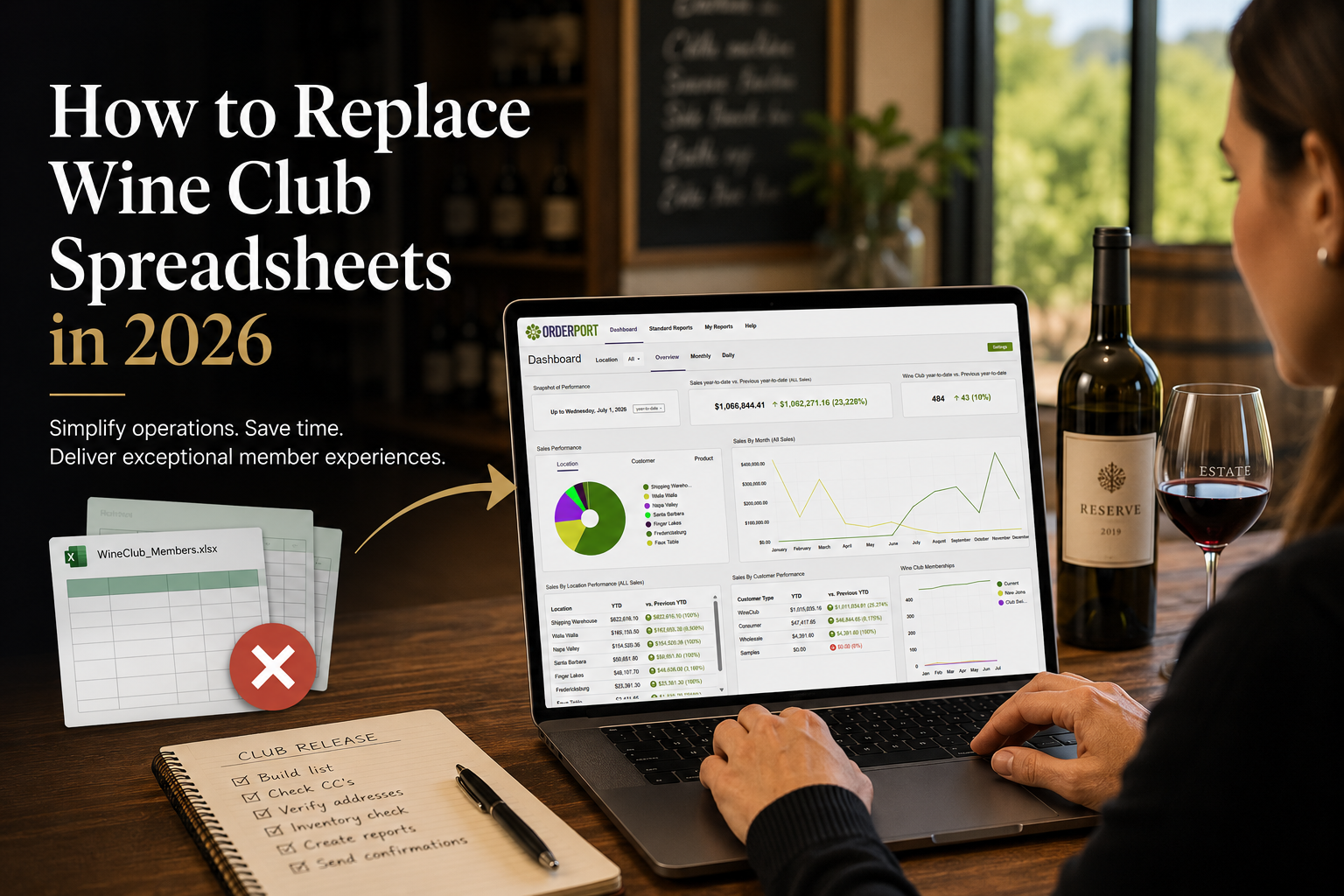
There comes a point in almost every winery's journey when someone says it out loud: "We really need a better way to manage this." Usually while they're staring at a spreadsheet.
Maybe it's a club member list with fifteen different color-coded columns. Maybe it's a release tracker that's been passed between three employees over the years. Maybe it's a workbook with seven tabs that only one person truly understands. If that sounds familiar, you're not alone.
For years, spreadsheets have been the unofficial wine club management system for wineries across the country. They're flexible, familiar, and inexpensive. When you have fifty club members and two releases a year, they can get the job done.
But wineries don't stay that size forever.
As your membership grows, so do the moving pieces. Multiple club options. Reservations. Ecommerce orders. Tasting room purchases. Shipping preferences. Failed credit cards. Pickup events. Member notes. Inventory planning.
Eventually, spreadsheets stop helping your team stay organized and start creating more work than they save.
The biggest problem with spreadsheets isn't Excel itself.
It's everything happening around it.
Think about your last club release.
How much time was spent:
None of those tasks create a better experience for your members, they're simply administrative work that has to happen because your systems aren't doing it for you.
Those hours add up quickly, especially during release season when your team should be focused on your guests instead of your spreadsheets.
Every winery has "that person."
The one who built the spreadsheet five years ago, the same one everyone calls when something breaks. They're also the one who's afraid to let anyone else edit the formulas. That isn't a process, it's a risk.
Modern wine clubs shouldn't depend on institutional knowledge living inside one employee's head.
Club releases should be exciting.
Instead, they often become weeks of exporting lists, correcting customer information, checking inventory, processing payments manually, updating fulfillment reports, and hoping nothing gets missed. The larger your club becomes, the more stressful release week feels.
Good software should make release week easier, not harder.
A guest joins the club online. Visits the tasting room. Books a reservation. Purchases a case during harvest. Attends your wine club party.
Where does all of that information live? If the answer is "several different systems"...or worse, multiple spreadsheets...your staff never has the complete picture. That means missed opportunities to personalize visits, recommend wines, recognize loyal members, or simply greet guests by name.
Want to know:
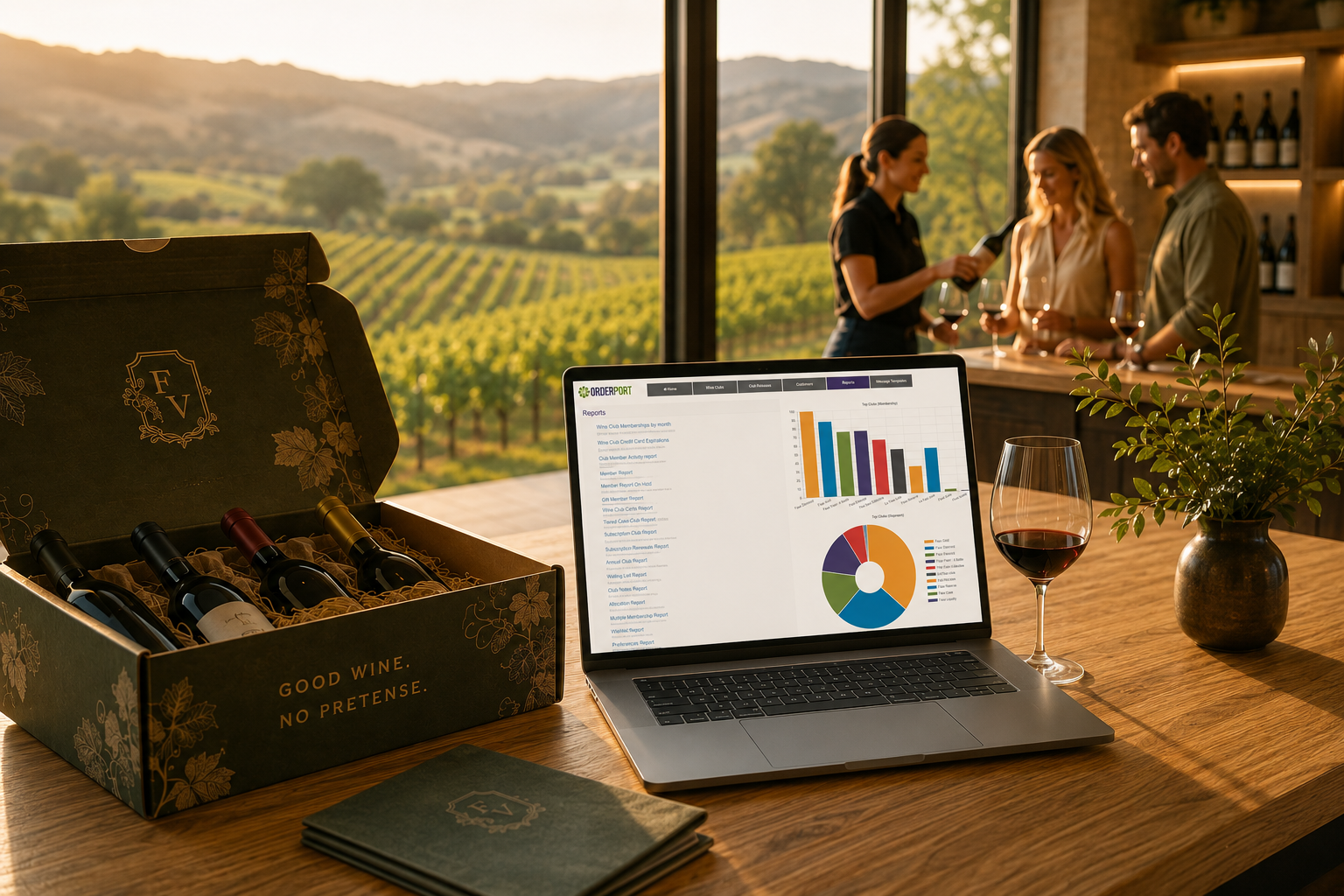
If answering those questions means exporting data into Excel and building pivot tables, you're spending valuable time finding information instead of using it.
Want to launch a choice club? New spreadsheet.
Thinking about an allocation club? Another spreadsheet.
Holiday gift club? Different spreadsheet.
Wine clubs should give wineries flexibility, not create more files to manage.
Today's wineries expect much more from their technology than they did five years ago. Your wine club software shouldn't simply process recurring orders. It should become the operational hub of your direct-to-consumer business.
Imagine a system where:
Instead of spending hours preparing data, your team spends more time creating memorable experiences.
That's the difference between managing a wine club and growing one.
Wine club members never think about the software powering your winery. What they remember is how you made them feel. They notice when they're welcomed by name at check-in, when a team member remembers the wines they love, and when their club benefits are applied automatically without needing to ask. They simply expect every interaction—from online purchases to tasting room visits—to feel connected, personal, and effortless.
None of those moments happen because someone updated a spreadsheet, they happen because your systems are connected. When your wine club communicates with your POS, ecommerce, reservations, payments, and customer database, every interaction becomes more personal without creating more work for your staff.
Your team spends less time searching for information and more time building relationships and that's exactly where they should be.
Most wineries didn't choose spreadsheets because they wanted to, they chose them because their software couldn't do what they needed.
That's where OrderPort is different.
Rather than asking wineries to stitch together disconnected tools, OrderPort brings your wine club, ecommerce, reservations, point of sale, payments, reporting, and customer management together in one connected platform.
Every interaction feeds the same customer record.
Every department works from the same information.
Every release becomes easier to manage.
Whether you're running a traditional wine club, a customizable choice club, subscription memberships, allocations, bottle loyalty programs, or case clubs, OrderPort gives your team the flexibility to grow without adding complexity.
Instead of managing spreadsheets, you're managing relationships; instead of maintaining data, you're creating experiences. And instead of wondering whether everyone is working from the latest version of the spreadsheet, everyone is working from the same connected system.
Spreadsheets helped many wineries get where they are today.
There's nothing wrong with that.
But if your team is spending release week fixing formulas, updating customer information by hand, or jumping between multiple systems just to answer simple questions, you've probably outgrown them.
Modern wine clubs aren't built around spreadsheets.
They're built around connected customer experiences.
And when your technology works together, your team can focus on what matters most: welcoming guests, building lasting relationships, and creating wine club members who can't wait for the next release.
If you're ready to replace spreadsheets with a platform designed specifically for wineries, OrderPort can help.
1 min read
Most wineries assume wine club churn is happening because consumer behavior changed.
1 min read
Launching a wine club is one of the smartest investments a small winery can make. It creates recurring revenue, builds stronger relationships with...
1 min read
Starting a wine club is exciting. Watching it grow is even better.