1 min read
Beyond the Tasting Room: 7 Local Partnerships That Drive Better DTC Growth
For years, most wineries have approached growth from the same direction. Increase traffic to the tasting room. Improve club conversion. Send more...
4 min read
Marketing : June 1, 2026
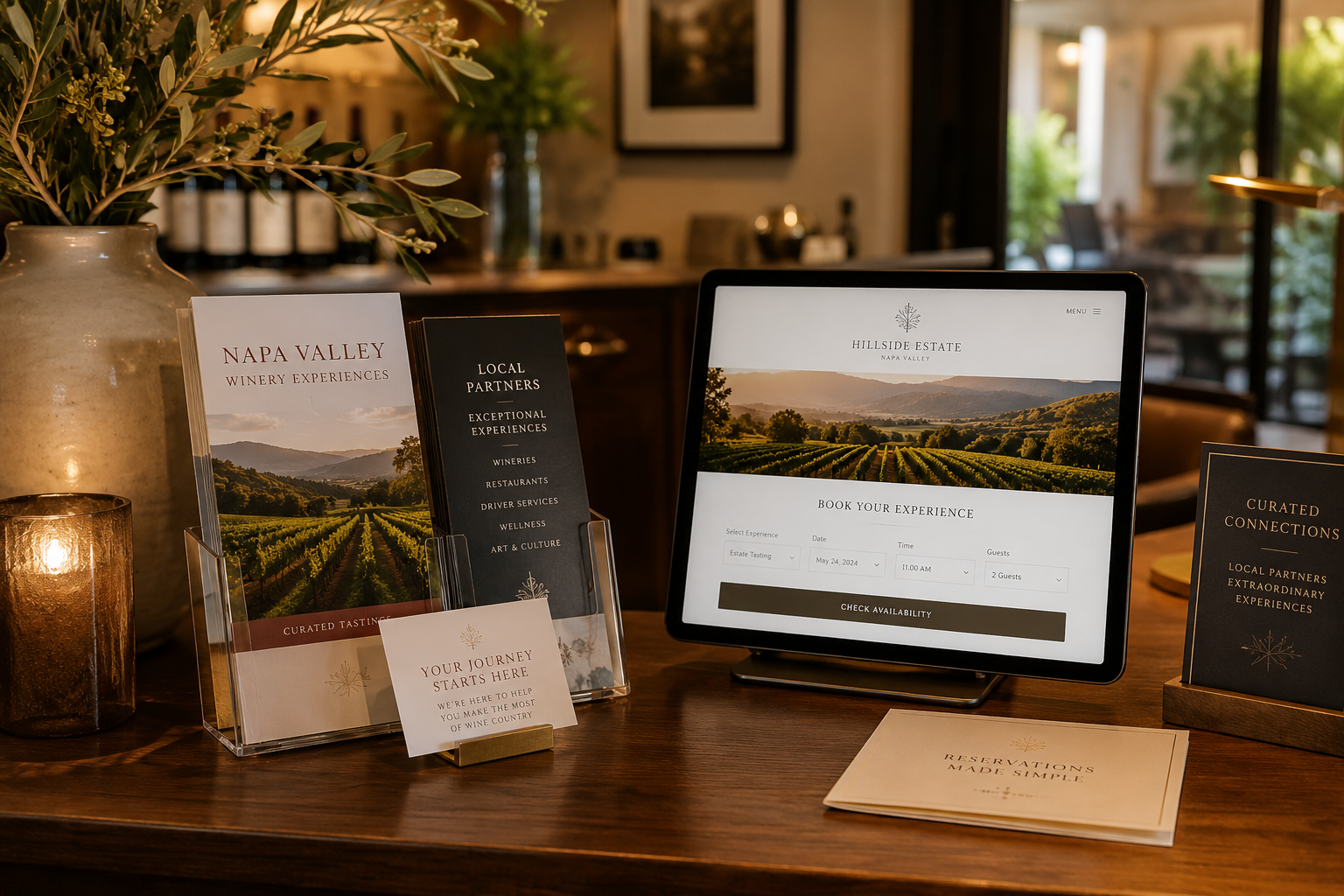
Most wineries already have partnerships.
They have hotels recommending them to guests. Drivers dropping groups at the tasting room. Restaurants pouring their wines. Local businesses occasionally asking about gifting during the holidays. On paper, it sounds like the foundation for a strong referral network already exists.
Yet when wineries look closely, most of these relationships are not producing consistent revenue. Referrals happen randomly. Staff members forget to mention partner perks. Corporate gifting requests arrive in a rush every December and disappear again in January. A concierge sends guests for a few weeks, then the relationship quietly fades because nobody followed up.
The issue usually is not lack of opportunity. The issue is that most winery partnerships are informal, reactive, and unsupported by systems that help them grow over time.
That is the partnership gap.
It is the space between casually working together and intentionally building a repeatable growth channel.
The wine industry is relationship-driven by nature, which is one of its greatest strengths. Wineries tend to collaborate easily because hospitality businesses naturally overlap. A boutique hotel wants guests to have a memorable wine country experience. A driver wants destinations that consistently treat clients well. A real estate office wants thoughtful closing gifts that feel local and personal.
The problem is that many partnerships never move beyond the initial excitement.
A winery might meet a hotel manager, exchange cards, drop off a few tasting certificates, and assume the partnership is now “established.” For a few weeks, referrals happen. Then communication slows, staff changes occur, materials become outdated, and eventually both sides move on to the next priority.
Without structure, partnerships depend entirely on memory and momentum. Neither of those things lasts very long in a busy hospitality environment.
One of the most common mistakes wineries make is treating partnerships as favors instead of business systems.
They hope referrals happen rather than building a process that encourages them consistently.
This shows up in several ways:
A concierge desk cannot consistently recommend your winery if the staff does not know:
The same applies to corporate gifting relationships. Many wineries approach gifting seasonally and reactively. A business reaches out in December, the winery scrambles to put together options, shipping becomes stressful, and nobody follows up afterward to build recurring business.
That is not a scalable channel. That is survival mode.
There is a major difference between being “recommended sometimes” and building a true partnership network.
A casual referral relationship usually looks like this:
A structured partnership system looks very different:
The wineries seeing the most success with partnerships are not necessarily the ones with the biggest tourism markets or largest marketing budgets. They are the wineries building systems around consistency.
They understand that partnerships require maintenance just like wine clubs, ecommerce, or hospitality operations.
Even when partnerships are generating traffic, wineries often fail to convert the opportunity because the operational experience is not aligned.
This happens more often than many wineries realize.
A hotel concierge recommends a winery because the experience sounds elevated and welcoming. The guest arrives and struggles to figure out where to park, how to check in, or whether they even belong there. A driver drops off a group expecting a seamless reservation process, only for the tasting room to appear understaffed or confused about the booking.
The partnership itself did not fail. The operational experience did.
Strong partnerships amplify whatever experience already exists. If the experience is inconsistent, the inconsistency becomes more visible.
That is why wineries need to evaluate:
If partner-referred guests are not entering your database, receiving follow-up communication, or being introduced to the wine club experience, you are losing much of the long-term value of the relationship.
Many wineries unintentionally make it difficult for partners to promote them.
Hotels, drivers, and corporate contacts are busy. They need simple, easy-to-share information.
Instead, wineries often provide:
A strong partnership program removes friction wherever possible.
That means providing:
The easier you make it for someone to recommend you, the more likely they are to continue doing it consistently.
Corporate gifting deserves special attention because it is one of the few partnership channels capable of scaling quickly when structured correctly.
Yet many wineries still approach it as an occasional holiday sales opportunity instead of an ongoing business relationship strategy.
Businesses are constantly looking for ways to:
Wine fits naturally into those moments because it feels personal, elevated, and experience-driven.
The mistake wineries make is forcing businesses through a complicated process every single time.
Corporate gifting should feel easy.
Businesses should be able to quickly understand:
The wineries building strong gifting channels usually simplify aggressively. They offer curated package tiers, streamlined intake forms, and clear communication that removes uncertainty from the process.
Most importantly, they follow up after the order instead of treating the relationship as complete once the shipment leaves the warehouse.
Another common failure point is lack of internal ownership.
Partnerships often sit in an awkward space between hospitality, sales, and marketing. Everyone assumes someone else is handling it.
As a result:
Even a small winery benefits from assigning one person responsibility for partnership communication and oversight.
That does not mean partnerships need an entire department. It simply means someone needs visibility into:
Without ownership, even good partnerships slowly drift apart.
The most effective winery partnerships are not built around transactions. They are built around aligned customer experiences.
A great hotel partnership is not simply about sending guests somewhere for tastings. It is about helping visitors experience the region more fully.
A strong corporate gifting relationship is not just about holiday revenue. It is about helping businesses strengthen relationships with their own clients and employees.
When wineries focus only on immediate sales, partnerships remain shallow. When they focus on building systems that support long-term relationships, partnerships become sustainable growth channels.
Most winery partnerships fail quietly.
Not because the opportunity was wrong, but because the structure behind it was missing.
The wineries that consistently grow through collaborations are rarely doing anything flashy. They are simply:
Partnerships should not feel random or accidental.
When supported by strong hospitality, operational clarity, and consistent communication, they become one of the most reliable and cost-effective growth channels available to modern wineries.
1 min read
For years, most wineries have approached growth from the same direction. Increase traffic to the tasting room. Improve club conversion. Send more...
1 min read
Blackberry. Cedar. Vanilla. Great. But no one buys a case because of “hints of graphite.”
1 min read
Every winery says they’re “family-owned,” “passionate,” and “committed to quality.” That is not a story. That is the baseline.