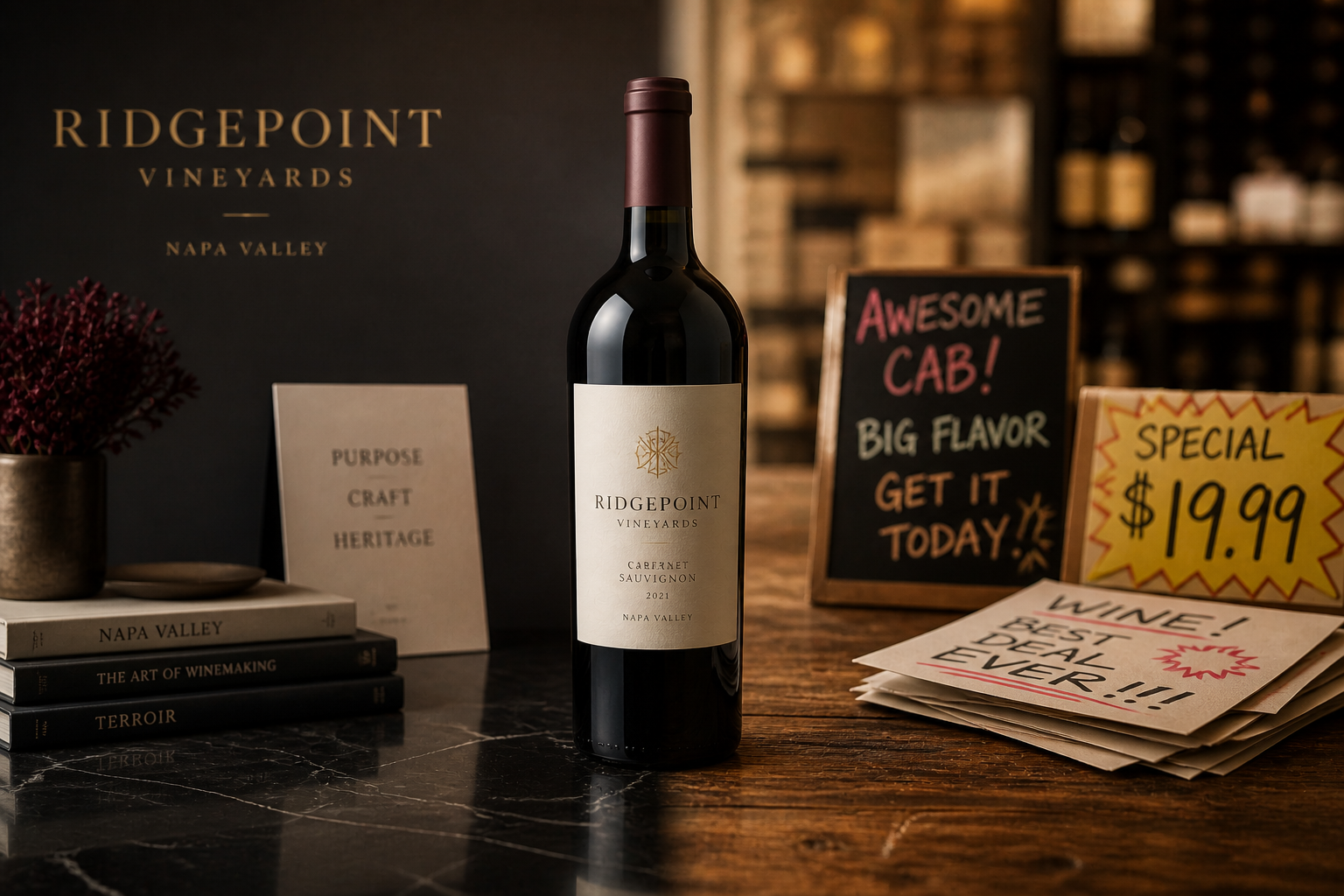
If your website sounds premium, your emails sound promotional, and your tasting room sounds casual…

You do not have a brand voice, you have multiple personalities.

Most wineries do not struggle with a lack of story or quality, they struggle with consistency. A customer might discover you on social, browse your website, join your list, and visit your tasting room, yet each step feels like a different brand. That disconnect creates hesitation, and hesitation is where sales are lost.

The Real Issue: Inconsistency Breaks Trust

Direct-to-consumer wine sales depend on trust more than almost any other channel. Customers cannot taste through a screen, and they often cannot compare side by side in real time. They rely on signals that tell them they are making the right choice.

Your brand voice is one of those signals.

When your tone shifts from polished to pushy to overly casual, it creates friction. The customer starts to question what you stand for and whether the experience will match the expectation. Even small inconsistencies can make a brand feel less reliable, which makes it easier for someone to click away or choose a different winery.

Where Wineries Break Their Voice

Most wineries do not intentionally create inconsistency. It happens when different parts of the business operate in silos or when content is created reactively instead of strategically.

Website vs. tasting room

Your website often reads like a curated brand experience, while your tasting room team speaks in a completely different tone. One might feel elevated and intentional, while the other feels casual and improvised. Neither is wrong on its own, but the gap between them creates confusion.

Email vs. everything else

Email is where many brands lose control of their voice. Promotions become more aggressive, subject lines feel disconnected from the rest of the brand, and the tone shifts toward urgency without context. This can make even loyal customers feel like they are being sold to instead of invited in.

Social media vs. brand identity

Social channels often chase trends or adopt a voice that does not match the rest of the business. A playful or informal tone can work, but it needs to feel like an extension of the brand rather than a departure from it.

Why Consistency Drives Revenue

Consistency is not about sounding the same in every sentence. It is about creating a recognizable and reliable experience across every touchpoint.

Familiarity builds confidence

When a customer encounters the same tone, values, and perspective across your channels, it becomes easier to trust what they are seeing. They start to feel like they understand your brand, which reduces uncertainty.

Confidence reduces friction

Every purchase decision includes a moment of hesitation. Consistency removes unnecessary questions and allows the customer to move forward more easily. The path from discovery to purchase feels smoother because nothing feels out of place.

In a competitive DTC environment, small reductions in friction can have a meaningful impact on conversion rates.

Defining Your Voice Without Corporate Language

You do not need a complex brand document to define your voice. You need clarity and alignment.

Start with three words

Choose three words that capture how your brand should sound and feel. These should be specific enough to guide decisions but simple enough for your entire team to remember.

For example, a winery might choose refined, approachable, and grounded. Another might choose bold, expressive, and modern. The goal is not to sound impressive. The goal is to be clear.

Define what you are and what you are not

Each word should have a boundary. If you say you are approachable, what does that mean in practice, and what does it exclude? Does it mean you avoid technical jargon, or that you explain it in a more conversational way?

This step prevents your voice from drifting over time and helps your team make consistent choices.

Applying Your Voice Across the Business

Once your voice is defined, it needs to show up everywhere your customer interacts with you.

Website product pages

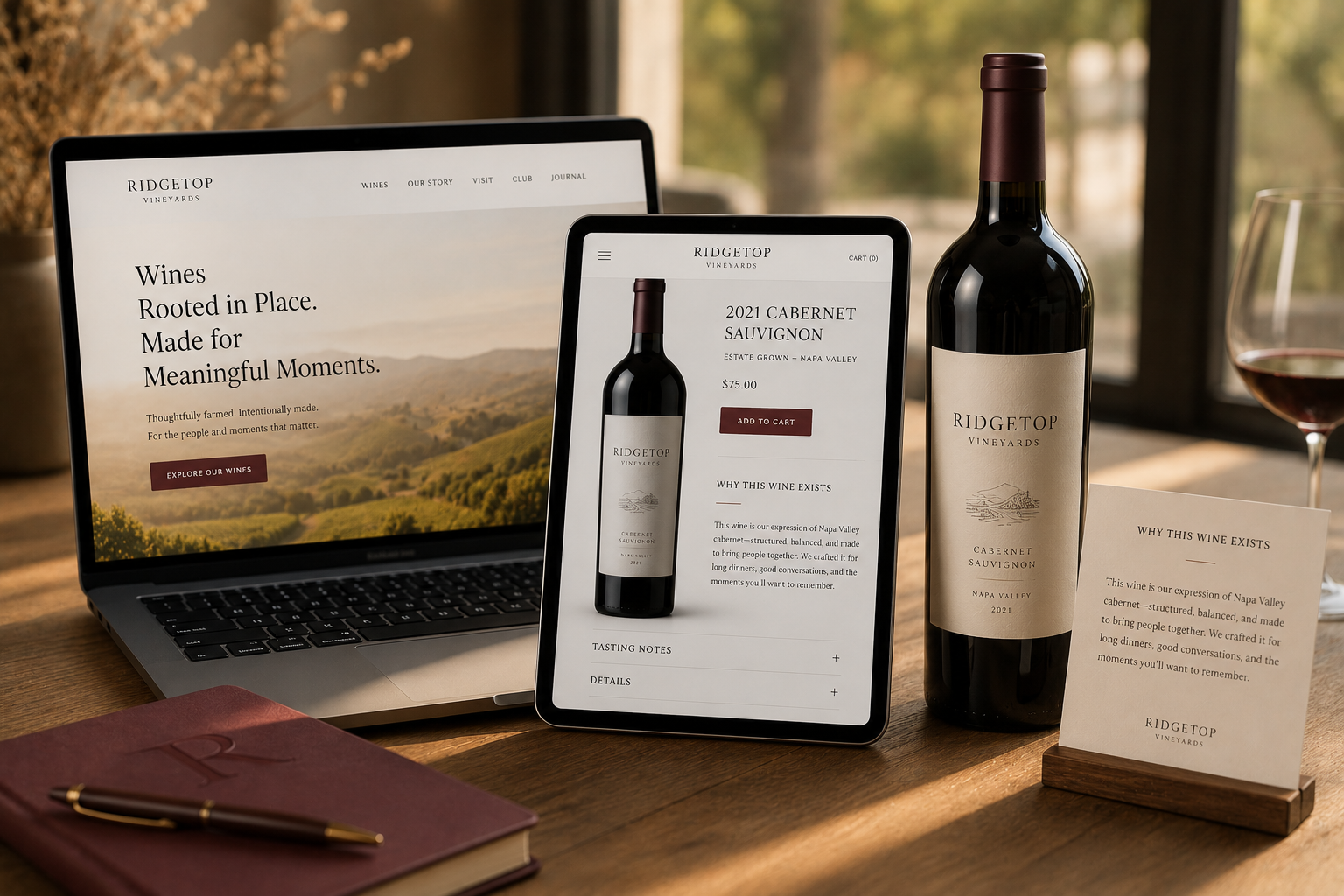
Your product pages should reflect both your tone and your point of view. If your brand is warm and conversational, your descriptions should feel like a natural extension of a conversation, not a technical sheet. If your brand is more structured and classic, your language should reflect that without becoming overly formal.

Wine club messaging

Your club is one of the clearest expressions of your brand. The way you describe membership, shipments, and benefits should reinforce who you are. Focus on belonging and experience, not just discounts and logistics.

Tasting room experience

Your staff are the voice of your brand in real time. Give them language that reflects your tone and helps them tell your story in a consistent way. This does not mean scripts. It means shared language and clear direction.

When a guest hears the same story and tone that they saw online, it strengthens the connection and makes the experience feel intentional.

A Practical Tool You Can Use Right Away

Utilize a one-page brand voice cheat sheet that your entire team can reference.

Include your three voice words, a short description of each, and a few examples of how they show up in real language. Add a short section that outlines what to avoid, along with a few sample phrases that reflect your tone.

This document should be simple enough to use and clear enough to guide decisions across marketing, sales, and hospitality.

Start Here

Choose one customer journey and follow it from start to finish. For example, begin with a social post, move to your website, then to a product page, and finally to checkout.

As you move through each step, ask a simple question. Does this feel like the same brand?

If the answer is no at any point, that is your opportunity.

Consistency is not about perfection. It is about alignment. When your voice feels clear and consistent, your customers feel it too, and that confidence makes it easier for them to say yes.